


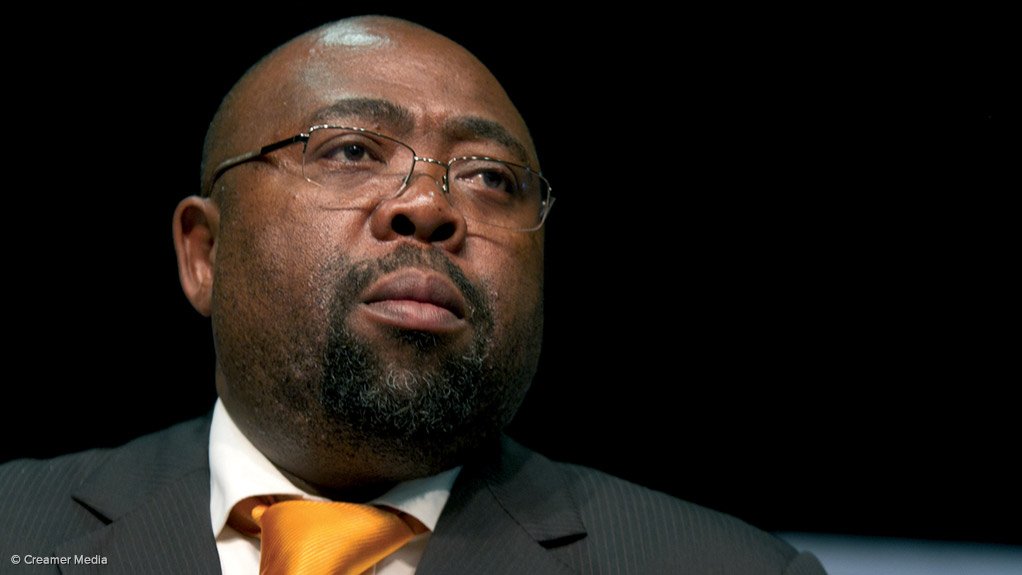
Minister of Employment and Labour Thulas Nxesi choose to ignore repeated pleas by the
United National Transport Union (UNTU) to review the threshold of the Basic Conditions of
Employment Act (BCEA) that has been stagnant for the past five years.
This means that less and less workers enjoy the basic rights to have fair labour practices that
the BCEA affords them. Employers simply have to pay employees above the BCEA R205
433.30 per year threshold that has not increased since 1 July 2014. It amounts to R17 119
per month.
Steve Harris, General Secretary of UNTU, says according to Stats SA’s employment report
for the first quarter of 2019, the average income in South Africa is R20 855 per month. It was already above the BCEA threshold on R17 252 per month in February 2016. “By not increasing the threshold for five years, Government allows employers to abuse
vulnerable employees who is not being protected by the act when it comes to overtime work,”says Harris.
The BCEA governs respectively:
• Limiting ordinary hours of work to 45 hours per week;
• Payment for any overtime worked in excess of 45 hours;
• Limitations on a compressed working week;
• Provisions which allow for the averaging of a work week;
• Mandatory provision of a meal interval of not less than 30 minutes for employees
whom work for longer than 5 hours;
• Provisions which allow for certain mandatory minimum daily and weekly rest periods;
• An employee is entitled to increased pay for work on Sundays;
• Payment of a mandatory allowance for employees who engage in night work;
• Increased pay for employees who work on public holidays.
On the 27 January 2019 Nxesi’s predecessor, Minister Mildred Oliphant, gave her personal
undertaking to review the threshold urgently.
Harris says Government under the administration of President Cyril Ramaphosa has done
very little to alleviate poverty, create jobs for the unemployed masses, especially black young
women, and to ensure that workers have decent work and receive decent wages.
The unemployment rate in the country increased to 29 % in the second quarter of 2019,
highest jobless rate since the first quarter of 2003.
UNTU realises that the eight years of state capture of all our state-owned enterprises (SOE’s)
and the billions lost to corruption contributes to the unemployment figure. But despite all the
shocking revelations in front of the Zondo Commission and the numerous forensic
investigations conducted in the past few years, there has been no arrests of the alleged
corrupt officials by the South African Police Service (SAPS) and no prosecutions by the
National Prosecuting Authority (NPA) to put the culprits behind bars.
UNTU is of the view that justice must be seen to be done, for the benefit all South Africans,”
says Harris.
UNTU represents majority of workers employed by Transnet and the Passenger Rail Agency
of South Africa (Prasa).
Issued on behalf of UNTU by Sonja Carstens, Media, Liaison and Communication Officer.
For more information phone Carstens on 082 463 6806 or e-mail sonja@untu.co.za.